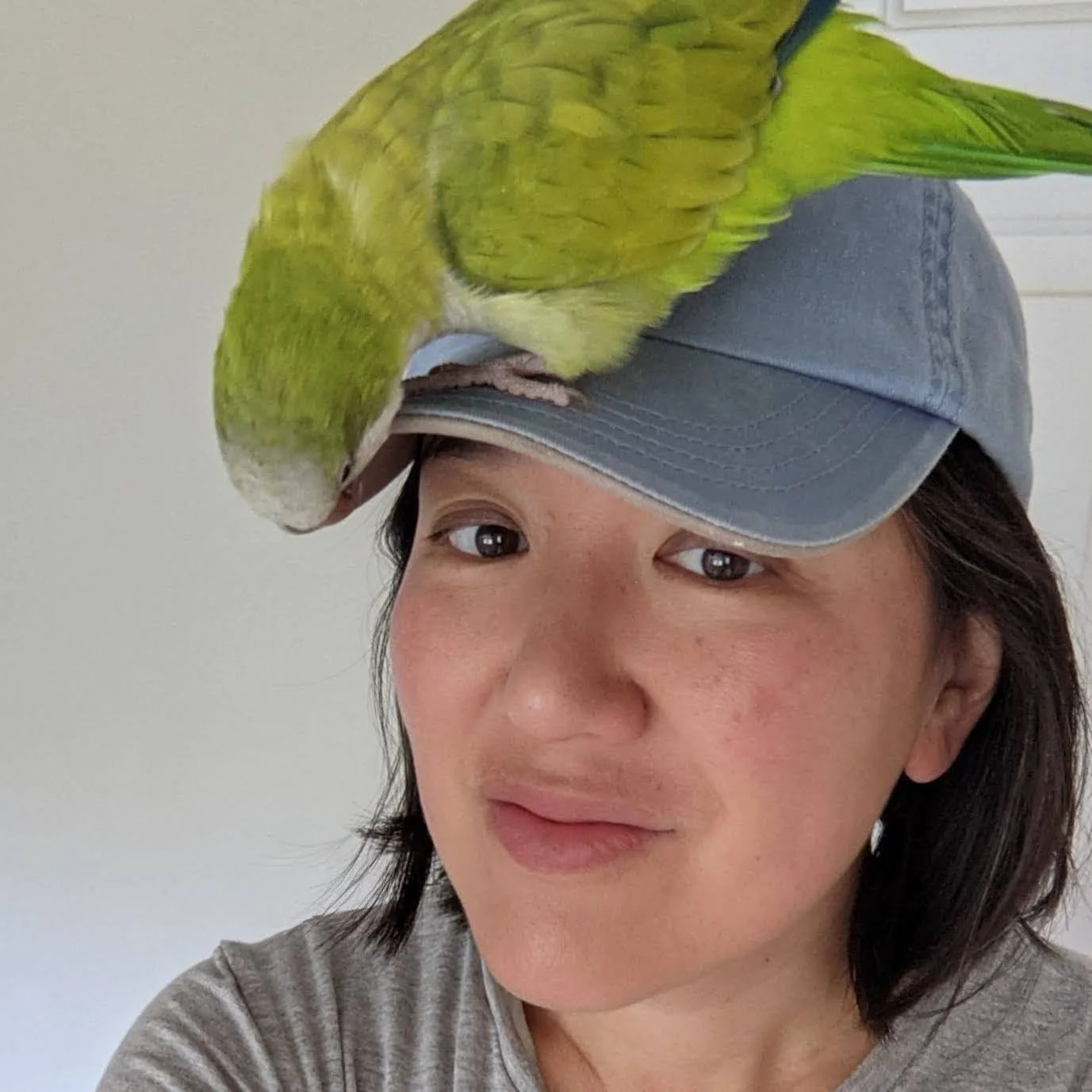
Joy Tappen: Narrative Feather Art
Bainbridge Island-based artist Joy Tappen transforms naturally shed feathers into intricate, hand-carved depictions of the avian world. Her work serves as a window into the lives of birds, honoring their complexity and the intricate structures that give them beauty and flight.
Joy’s interest in wildlife was first sparked in childhood by a birding schoolteacher and an immersive outdoor education program in her native Canada. While she trained as a physician, she spent the following decades raising her four children and leading community initiatives in music and education. Her interest in avian life was further cemented in years of volunteering at a wildlife rehabilitation center.
A natural maker, Joy has always been drawn to precision-based projects, from building wooden kayaks to crafting elaborate textiles. Her current medium represents a natural evolution of these diverse interests: the steady hand of a clinician, the patience of a maker, and the knowledge of an avian rehabilitator.
A decade ago, she discovered the work of world-renowned artist Chris Maynard. Captivated by his fusion of ornithology and exacting craft, Joy apprenticed under Maynard for five years, mastering the specialized techniques of carving and mounting feathers. Today, Joy uses surgical tools to carve paper-backed, ethically sourced feathers. These are mounted on entomology pins within shadow boxes to highlight their dimensionality and create a sense of movement.
Joy’s work invites viewers to look more closely at the creatures with whom we share this planet. Her practice is born from the belief that close observation sparks interest, and interest grows into a love that motivates us to care for the natural world. By transforming shed plumes into stories of flight, she hopes to inspire a deeper reverence for the wild lives all around us.
About the Feathers
All feathers used in Joy’s art are legal-to-possess in the United States. The Migratory Bird Treaty Act of 1918, originally enacted to protect native species from uncontrolled slaughter for the millinery (hat) trade, makes it illegal to own feathers from most native species, with the exception of turkeys and grouse. Thus, most of the feathers used are from species not native to North America, and are sourced from private aviaries and zoos. Many of the feathers were naturally shed, so the birds that the feathers belong to may still be alive. No birds were harmed to collect the feathers used in this art.
